The actors/actresses were exactly as I’d imagined the characters. Zoey Deutch and Lucy Fry were fantastic as Rose and Lissa, and their friendship was completely natural and believable.
One of the most important aspects of Vampire Academy is the friendship and intense loyalty between Rose and Lissa, who share a bond which allows Rose to perceive Lissa’s thoughts and feelings. So I was pleased to see that their relationship was an important aspect of the movie, as well.
SOUNDTRACK
Rose is an impulsive, feisty, and snarky character, and the soundtrack perfectly reflected her personality. I’ve watched the trailer multiple times, and the background music is spot-on for the overall tone of the movie as well as the book.
ALSO…
I thought the producers struck a really great balance between the darker aspects of the movie and the humor. The characters are witty, and often it was the dialogue that made me laugh aloud. (Sarah Hyland, who played Natalie, was also really funny.)
Best line of the entire movie: “They say Dimitri is a god. But I’m an atheist. With a gun.”
Be sure to check out Richelle Mead’s review of the movie! I think she made some great points and it’s definitely reassuring to hear an author praise the movie adaptation of her book.
If you’ve read the book but haven’t seen the movie, SEE IT. If you’ve seen the movie but haven’t read the book, READ IT.
I was completely sucked into Vampire Academy, written by Richelle Mead. (That was my lame attempt at a vampire joke. Sorry.)
I’d pretty much sworn off vampire books, but decided to give this one a shot. Needless to say, I finished the book in about a day and immediately began reading Frostbite, book 2.
Vampire Academy is about a girl named Rose Hathaway, who is training to become the guardian of Lissa Dragomir, a vampire with royal heritage. Lissa is the heir to the Moroi throne, and she and Rose share a “bond,” which means Rose can sense what Lissa is thinking and feeling.
They’ve been on the run for two years, but they’re caught and taken back to the Academy. The dangers that prompted them to run away are still ever-present, but the girls also have petty high school drama to worry about.
Rose is impulsive, and has a quick temper. She was a great heroine, not only because of her smart mouth, but more so because of her intense desire to protect her best friend at all costs. Rose and Lissa’s friendship is real and inspiring. When it comes to Lissa, Rose is completely unselfish. And as they eventually discover, their bond means more than they could have ever imagined.
The book was exciting and captivating. Romance, tension, mystery, wit – this book had it all. I’m looking forward to the rest of the series.
I think we’d all like to justify our excessive TV watching.
Netflix, Amazon Prime, and Redbox give us easy access to our favorite movies and TV shows. We spend hours glued to our TVs, phones, or computer screens watching episode after episode. And we feel guilty because it’s time we should have spent writing instead.
Here’s the thing: we shouldn’t feel guilty, because there is much to be learned from TV. And if you watch with a writer’s mindset, you can simultaneously enjoy the entertainment and improve your writing skills.
The writer’s mindset, of course, is the key. Below, I’ve listed the things you should pay attention to as well as a few questions you could ask yourself as you watch.
1. Observe character relationships and character growth.
Ask yourself this question: What has captured my attention? Why do I watch this show?
There may be several reasons, but I’d be willing to bet it’s your love for the characters that’s first and foremost.
We sympathize with the protagonist. We enjoy being a part of their story world. Their every-day conflicts are engaging and interesting. And, most of all, we want to watch them change and mature. The completion of a character arc in a novel is often difficult to accomplish. On screen, the completion of character arcs seems effortless.
What does the protagonist want more than anything? What is their motivation? What gives them purpose? What is his/her goal?
You need to be answering these questions for each of your own characters. It’s a learning exercise, however, to answer these questions for the characters of a favorite TV show because it could shine some light on what you’re missing or could strengthen or improve.
It isn’t all about the protagonist, of course. Sometimes I watch a show solely for the sub-plots. Two supporting characters are falling in love. The protagonist’s best friend suddenly has his own goal, his own conflict. Pay close attention to the protagonist’s relationships with other characters.
Did the protagonist’s perceptions of someone change? Has the protagonist been betrayed? Who does the protagonist trust, and why?
Let me touch briefly on TV romance. Yes, it can be cliché. But I think it’s especially helpful to see how a romance gradually builds, because rarely do two characters fall immediately in love.
2. Take note of the carefully constructed plot.
TV shows are unique because the typical episode runs between 30 minutes to an hour. This is a short period of time for problems/conflicts to be introduced and resolved.
Therefore, episodes follow a formula, which may or may not be easily identifiable. This is similar to structuring a novel. We recognize the importance of structure, because without basic elements our stories would collapse.
So…what plotting techniques do you believe you could use in your novel? What worked for that TV show?
On the other hand, be sure to ask yourself what you would have done differently. Maybe you felt the conversation the protagonist overheard was a bit too convenient. How could you have made it less hackneyed?
Please, whatever you do, don’t overanalyze. I’m merely suggesting you turn your TV-watching time into an opportunity to be productive.
Get Smart (the old TV show), White Collar, Downton Abbey, Elementary, Covert Affairs, Chuck, and Veronica Mars are the TV shows I’ve been addicted to at some point or another in the past several years. I watched episodes back-to-back and nothing could stop me. But I’m currently writing a spy novel, and I think that’s one of the reasons I’m so drawn to mystery and crime on TV.
I’m pretty excited to share this news – I’ve got a new camera (an early graduation gift)! It isn’t something I’ve shared here on the blog before, but I love photography. For the past couple of years I’ve played around with my dad’s Nikon (I especially love taking pictures of people) but now that I have my own camera I’m really looking forward to experimenting.
The camera is a Canon EOS Rebel T3. The above picture is of a beautiful tree in my backyard a little before sundown.
The purpose of sharing this with you is because I plan on using the camera to take photos for the blog. In the past I’ve downloaded images from the internet, which I haven’t always cited/credited to the original source.
Anyway, I’ve got a lot to learn, but I can’t wait to get started. 🙂
In honor of Valentine’s Day, I’ve decided to put together a list (in no particular order) of my favorite YA romances. It was very difficult to choose, and I’m sure there are many more I haven’t yet read. And below List #1, I’ve linked to three very well written posts about the art of writing romance. Enjoy!
For readers:
I appreciate books when they are about something larger than myself. Romance is simply a bonus. The authors of the books listed below did such a great job incorporating romance into an already incredible plot.
Harry Potter (J.K. Rowling) – Harry and Ginny, Ron and Hermione Hunger Games (Suzanne Collins) – Peeta and Katniss Divergent (Veronica Roth) – Four/Tobias and Tris Clockwork Angel (Cassandra Clare) – Will and Tessa Graceling (Kristin Cashore) – Po and Katsa This Lullaby (Sarah Dessen) – Dexter and Remy
Something drew me to this book. (The cover art, maybe??) I really, really, really wanted to like it, and it did not disappoint!
First of all, I love that it’s a modern retelling of Cinderella. Cinder, a renowned mechanic in New Beijing, lives with her stepmother and two stepsisters. Her stepmother hates her, because Cinder is a cyborg, considered to be a lesser member of society. After she was involved in an accident as a child, she was given mechanical limbs to replace the ones she lost.
But everything is about to change for Cinder, because Prince Kai needs her help, and her younger stepsister has been diagnosed with the plague letumosis. On top of it all, Cinder’s stepmother is determined to get rid of her by volunteering her for plague research.
This book has a bit of everything, including romance, intrigue, action, and super-cool futuristic technology. Earth may or may not be on the brink of war with Luna (the moon). The prince is secretly searching for a Lunar princess who may or may not be dead. An evil queen has mind-control powers.
The characters were unique and interesting. Cinder is brave, caring, and resourceful. I rooted for her from page 1.
I finished this book quickly, and now I’m disappointed because I wish I were still caught up in Cinder’s world. I think part of the reason I found this book so engaging was because author Marissa Meyer spared Cinder nothing. The tension and the stakes mounted throughout the book, which held my attention and kept me turning pages. The end left Cinder in a very dangerous place, and I can’t wait to get my hands on the remaining books of this series.
J.K. Rowling, author of the popular (huge understatement?) Harry Potter series, regrets Hermione Granger and Ron Weasley’s relationship. This news has caused much controversy, especially because she has chosen to admit this now, several years after the completion of the series.
What do I think? Hermione and Ron belonged together. And, regardless of what Rowling may think, I believe their relationship was believable and entirely authentic. Rowling said, “I wrote the Hermione/Ron relationship as a form of wish fulfillment.”
(What does that even MEAN?)
She continued, “That’s how it was conceived, really. For reasons that have very little to do with literature and far more to do with me clinging to the plot as I first imagined it, Hermione ended up with Ron.”
If she’s implying Hermione/Ron just didn’t make sense, or weren’t exactly compatible, I think many people would agree on some level. However, that’s exactly why their relationship was so beautiful.
Though Rowling describes her decision to pair the two characters as “wish fulfillment,” I think there is something to be said for going with your gut. Though she wasn’t entirely convinced Hermione and Ron made the perfect couple, something stopped her from pairing Hermione with the somewhat obvious mate (Harry). Sometimes you have to ignore your head and go with your heart.
I’m not angry or disillusioned with Rowling. She remains my favorite author. In my opinion, her regrets make her more human. She looks back at her work and isn’t entirely satisfied, because she notices something she wishes she had done differently. As do many of us. We are often our worst critics.
So I admire her for her honesty.
What are your thoughts? Hermione/Ron? Hermione/Harry?
Meet Elizabeth Stuckey-French, author and professor at Florida State University. She is the author of The Revenge of the Radioactive Lady and Mermaids on the Moon, and co-author (with Janet Burroway and Ned Stuckey-French) of Writing Fiction: A Guide to the Narrative Craft. I’ve recently had the privilege of meeting both Elizabeth Stuckey-French and husband Ned, (check out my interview with Ned!) who gave me such great advice about writing and college. Find out more by visiting her website.
Are you a fan of sharing what you’ve written during the “early stages,” and asking for advice? If so, who has the privilege of reading your first drafts?
Ned reads drafts of everything I write, and I do the same for him. He’s my best reader. I think it’s crucial for writers to have trusted readers to show their work to, because there many things you just can’t see about your own work, especially in the early drafts. Of course, what I really want when I show him something is to be told that what I’ve just written is amazing! Brilliant! The best thing I’ve ever written! But after some (inadequate) praise, he will get down to asking questions about the draft and pointing out problems. I don’t want to hear it then, but after awhile I always realize he’s right and pull up my bootstraps and get to work. (What are bootstraps, anyway?) After he reads a draft, I have a few other trusted writer/reader friends I’ll show things to before I send to my agent, who will also give me some advice. Sometime takes awhile to find just the right people to help you, and it’s good if you can read their work in return. If someone reads your work and tells you things that make you want to never write another word, that person isn’t a good reader for you.
What are the two most important traits writers can possess, and why?
Patience and Perseverance. Because most people just give up when they realize how frustrating and challenging the whole process is. Many people have writing talent, but most of those people aren’t compelled or compulsive or thick-skinned enough to keep going. Which is fine. Only keep doing it if you can’t not do it.
What is the one piece of advice you wish you had been given when you began writing?
It takes time, and lots of it, to get something into publishable form. It always take much longer than you think it will. Patience and perseverance.
How do you believe writers should connect with their local writing community? Why/why not is this beneficial?
Writers need each other. Join a writing group or start one! Writing itself is a lonely activity, but we can support each other’s work, pass on advice, etc, and make it feel less so. A writing community–either on-line or in person–is essential. I always tell students that they aren’t competing with other writers, although it can often feel that way. The only person they are competing against is the part of themselves that is lazy, careless, and just wants to do what’s easiest.
What do you believe is the greatest myth about succeeding in the writing/publishing world?
That once you’re a published writer everything is smooth sailing. Not true. It’s always a struggle. You always doubt yourself and wonder if you’ll measure up. And the publishing industry is simply a business, and a fickle business at that. A friend of mine won Pulitzer Prize and his next novel was turned down by a number of publishers before it was accepted. You can’t count on anything, so enjoy the process of writing, when you have your own little world to disappear into. That’s the only really satisfying part of the whole process.
What do you enjoy most about being a professor?
I have had some amazing students, many of whom have gone on to publish books. It’s always so exciting to work with students who are in love with writing and watching their progress. And I feel so lucky that I get to go into a class and talk about what I love most in the world. How great is that?
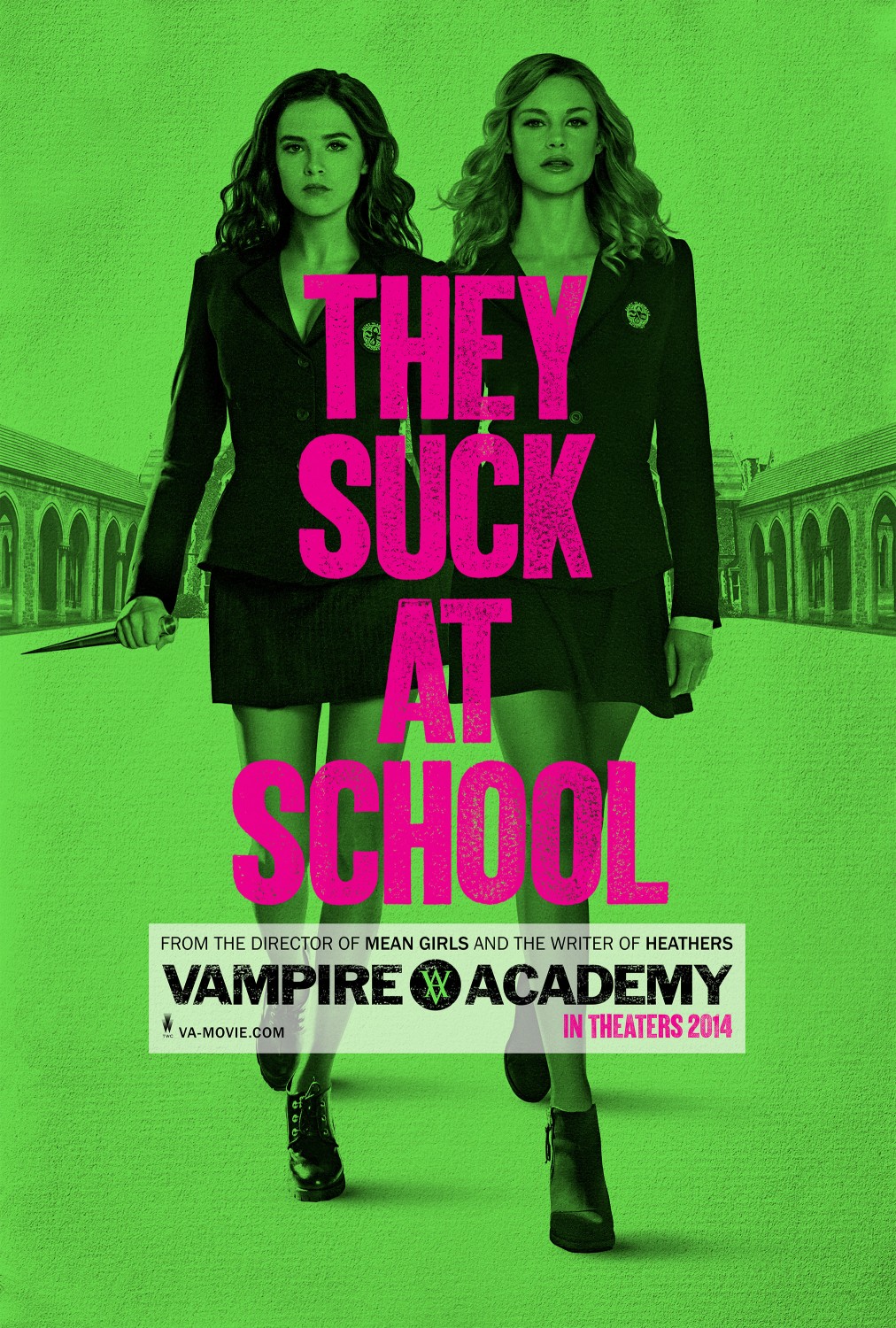
 I recently reviewed Vampire Academy, written by Richelle Mead. I loved the book and went to see the movie with a friend.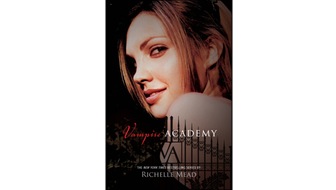

 I think we’d all like to justify our excessive TV watching.
 2. Take note of the carefully constructed plot.

 The camera is a Canon EOS Rebel T3. The above picture is of a beautiful tree in my backyard a little before sundown.
 In honor of Valentine’s Day, I’ve decided to put together a list (in no particular order) of my favorite YA romances. It was very difficult to choose, and I’m sure there are many more I haven’t yet read.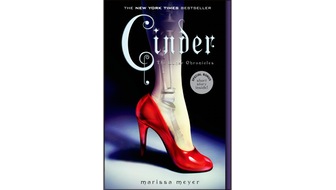

 I’m sure you’ve heard.
 She continued, “That’s how it was conceived, really. For reasons that have very little to do with literature and far more to do with me clinging to the plot as I first imagined it, Hermione ended up with Ron.”
 Meet Elizabeth Stuckey-French, author and professor at Florida State University.